


Share This Article
I’ve been enjoying pomegranates most of my life. As a child, I enjoyed sucking on the seeds until the juice was extracted, and then spitting the seed as far as I could. Later I learned that the seeds are edible and add fiber into your diet. Much later I learned how to make a pomegranate martini. And now I enjoy a splash of unsweetened pomegranate juice in club soda.
Pomegranates have been part of the diet since the early days of civilization. They are mentioned in the Bible, Greek mythology and have even been seen in Egyptian tomb paintings. The pomegranate has been a sacred fruit in most of the world‘s major religions. Ancient people believed they had medicinal value as well as beauty, and they were right on both counts.
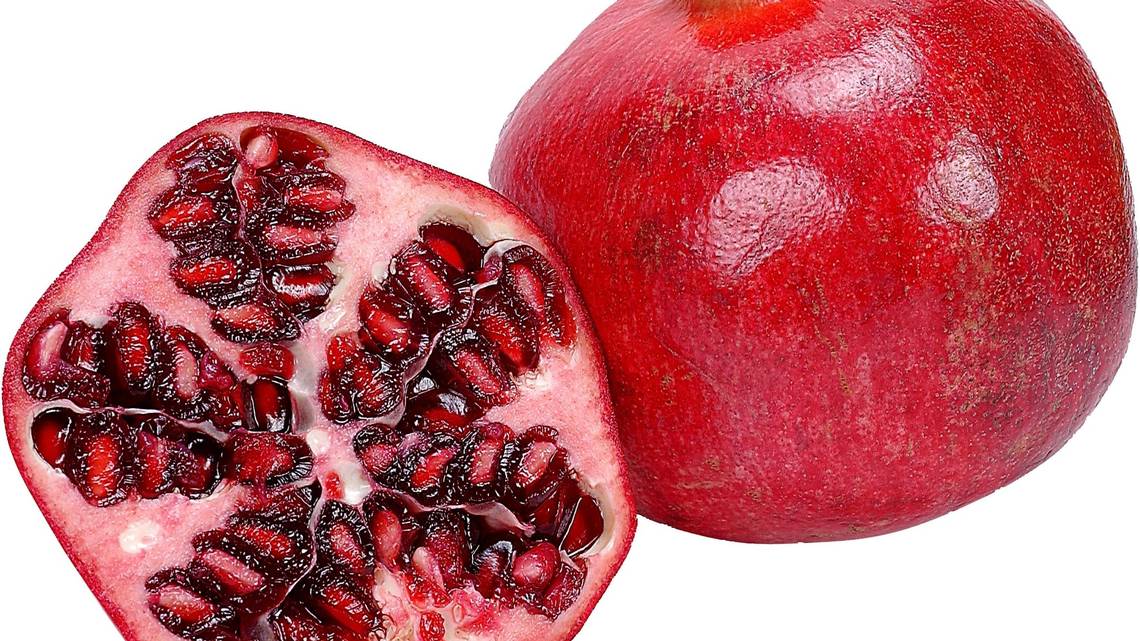
The seeds in a pomegranate are covered with bright red pulp. The pulp is called an aril. There are hundreds of arils in each pomegranate. If you ate all the arils in a single pomegranate, you would be getting about 5 ounces of fruit and 100 calories. Pomegranate are a good source of folate, potassium and vitamin K. The diversity of phytochemicals in a pomegranate are too numerous to list. At last count, there were 122 different ones. It is this abundance of phytochemicals that provides the health benefits pomegranates offer.
There is a significant body of research indicating that pomegranates boost heart health. Studies reveal that the diverse and rich phytochemical content decreases inflammation and thickening of the artery walls. Other studies have shown pomegranate juice or concentrate can slow the growth of certain types of cancer, including skin, breast, prostate and lung cancer. Those phytochemical are antioxidants that reduce inflammation. This can help people with arthritis.
