


Share This Article
Food manufacturers can breathe a little easier after new research found that two widely used processed fats produced equivalent short-term effects on key blood markers of cardiovascular risk in healthy adults. A six-week study tested what happens when people eat high amounts of these fats, and the team reported equivalent short-term effects.
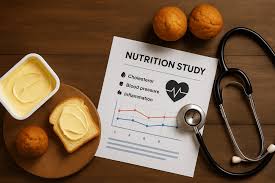
Forty-seven healthy adults consumed either palm-based fats or alternative processed fats as about 10% of their daily calories, far more than typical consumption but within the range of heavy users. Despite eating these elevated amounts for six weeks, people showed no meaningful differences in cholesterol levels, blood pressure, inflammation, or blood vessel function between the two fat types.
Palm-Rich and Stearic-Rich Blends: What Goes Into Your Spreads and Cookies
Food companies have relied heavily on these processed fats since trans fats were largely banned. The industry needed alternatives that could deliver the right texture, mouthfeel, and shelf life that consumers expect from baked goods, margarine, and countless packaged foods.
Two commercially used types are common in spreads and bakery applications: palm-based fats rich in palmitic acid and fully hydrogenated seed oil blends rich in stearic acid. Both undergo a process called interesterification that rearranges fat molecules to achieve desired properties without creating harmful trans fats.
Dr. Wendy Hall from King’s College London led the research team that decided to test these fats head-to-head. The researchers wrote that they aimed to compare the fat blends at realistic intake levels. Previous studies often used fats or doses that didn’t reflect what people actually encounter in the food supply.
How Researchers Fed Realistic High Intakes of Margarine-Style Fats
Participants consumed muffins and spreads that delivered 10% of daily calories from the assigned fat (approximately 19 grams per day for a 1700-kcal diet). This increased their intake of specific fatty acids by roughly 3-5% of total calories, akin to transitioning from moderate to heavy consumption of processed foods.
The research team tracked everything from basic cholesterol ratios to how blood vessels responded after high-fat meals. They measured inflammation markers, insulin sensitivity, blood pressure, and fat accumulation in the liver (measured at one center in a subgroup). Some participants underwent additional testing including flow-mediated dilation to assess blood vessel function and post-meal responses to fatty test meals.
